

MyoSponge™
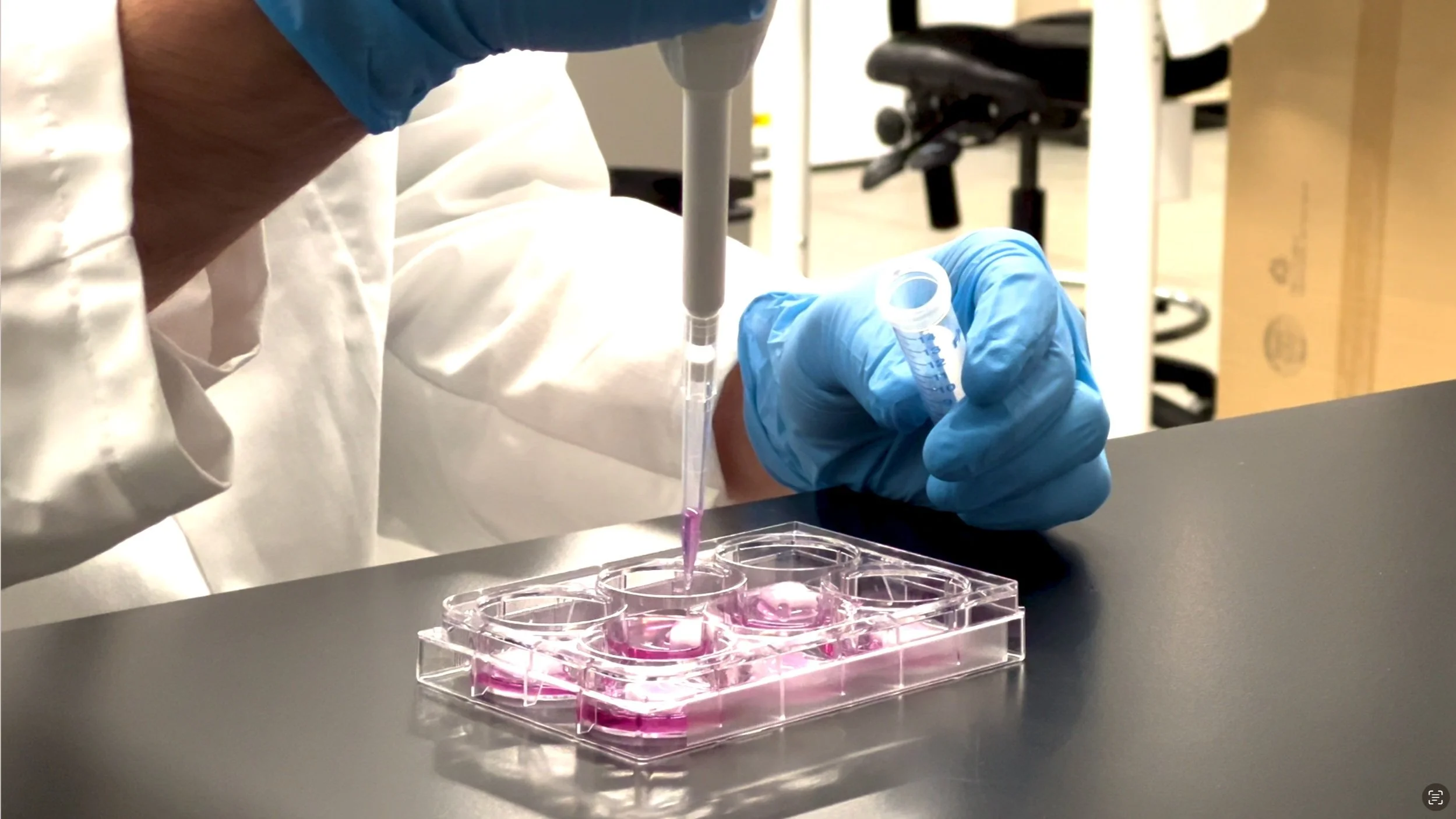
MyoSponge™ is a first-in-class, implantable, biomimetic scaffold designed to bridge the gap between trauma and recovery. MyoSponge provides a temporary structural and chemical environment that coaxes the body into regenerating functional muscle instead of scar tissue.
How It Works: The Science of Regenerative Medicine
MyoSponge is an acellular, off-the-shelf solution that leverages the body's own healing potential through three primary mechanisms:
Biomimetic Architecture: The scaffold is composed of a proprietary blend of extracellular matrix (ECM) proteins—including collagen, gelatin, and laminin. These proteins mimic the natural environment of skeletal muscle, providing the roadmap for host cells to follow.
Cellular Infiltration: The porous, sponge-like structure allows the patient’s own muscle stem cells (satellite cells) to migrate into the wounded area.
Dynamic Integration: Over a short period of time, the MyoSponge scaffold is gradually absorbed and replaced by the patient’s own healthy, contractile muscle fibers, restoring both mass and mechanical function.
Evidence: In animal models, MyoSponge™ implantation improved muscle structure and function.
Key Features & Benefits
Acellular Convenience: No need for biopsy or lab-grown cells; it is ready for immediate use in emergency or surgical settings.
Mechanical Support: Provides immediate structural integrity to reinforced wounded areas while the body heals.
Scalable Manufacturing: Produced via specialized lyophilization (freeze-drying) processes, ensuring consistent quality and global availability.
Clinical Applications
MyoSponge is engineered for use in high-stakes clinical scenarios where muscle tissue recovery is critical:
Traumatic Injury: Gunshot wounds, explosively formed projectiles, and high-impact orthopedic trauma.
Military Injuries: Complex reconstructions, compartment syndrome, and tumor resections.
Bulk Muscle Loss: Conditions like necrotizing fasciitis or invasive surgery where intervention is required.
Supporting Literature
Biomimetic sponges improve functional muscle recovery following composite trauma
Biomimetic sponges improve muscle structure and function following volumetric muscle loss
Biomimetic sponges for regeneration of skeletal muscle following trauma
Treatment of volumetric muscle loss in female rats with biomimetic sponges
Patent